
Practice Partnerships
For early learning centres, schools, OSHC services and community care organisations.
Growing Well Together works alongside educators, leaders and teams to strengthen regulation, connection and engagement across routines, transitions, curriculum and everyday group life.
Together, we identify pressure points, build shared understanding and turn relational wellbeing principles into practical approaches that fit your setting.
Hands-on support to strengthen relational
wellbeing in everyday practice
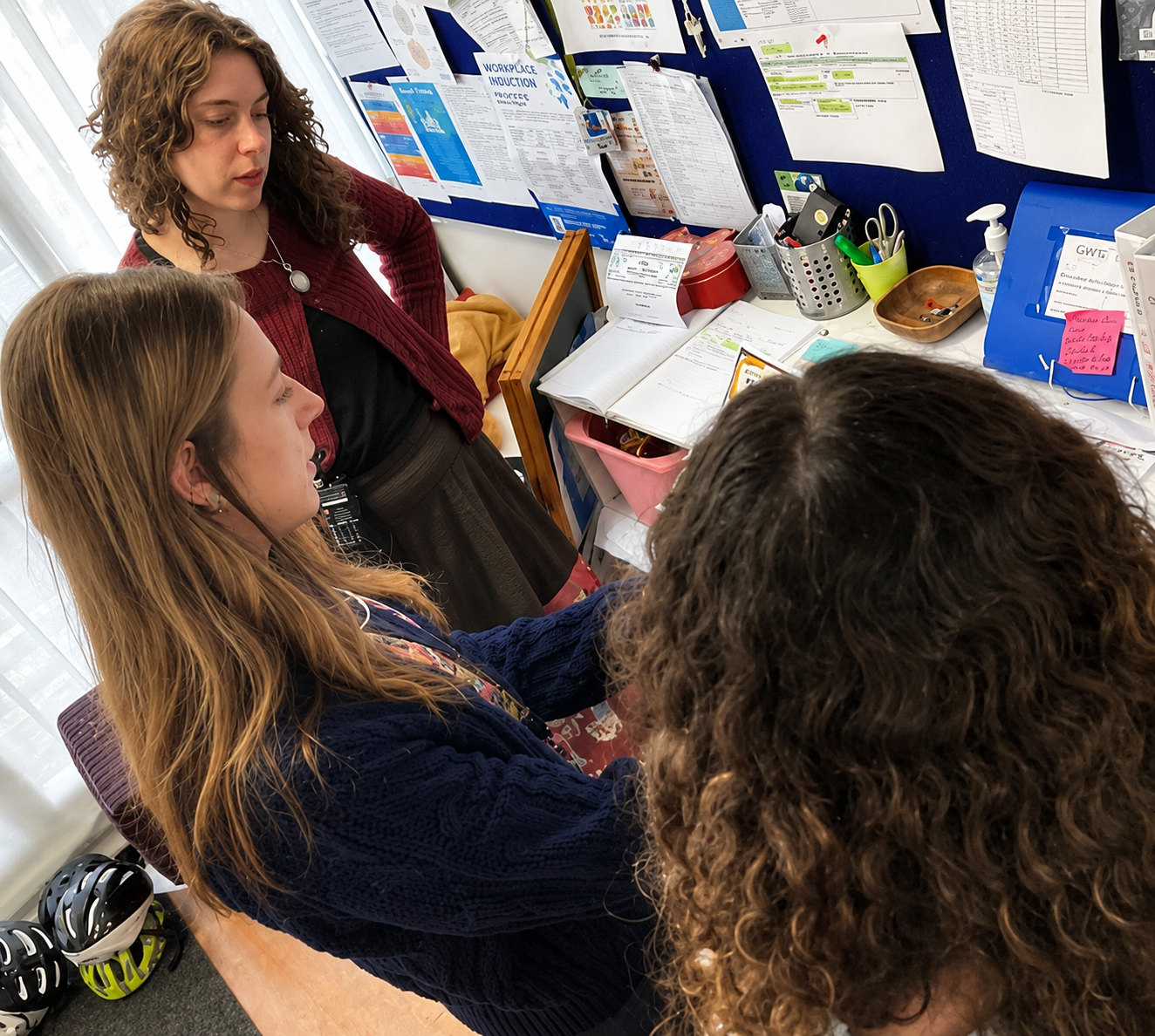
Real settings. Real teams. Real moments.

When a Practice Partnership may help
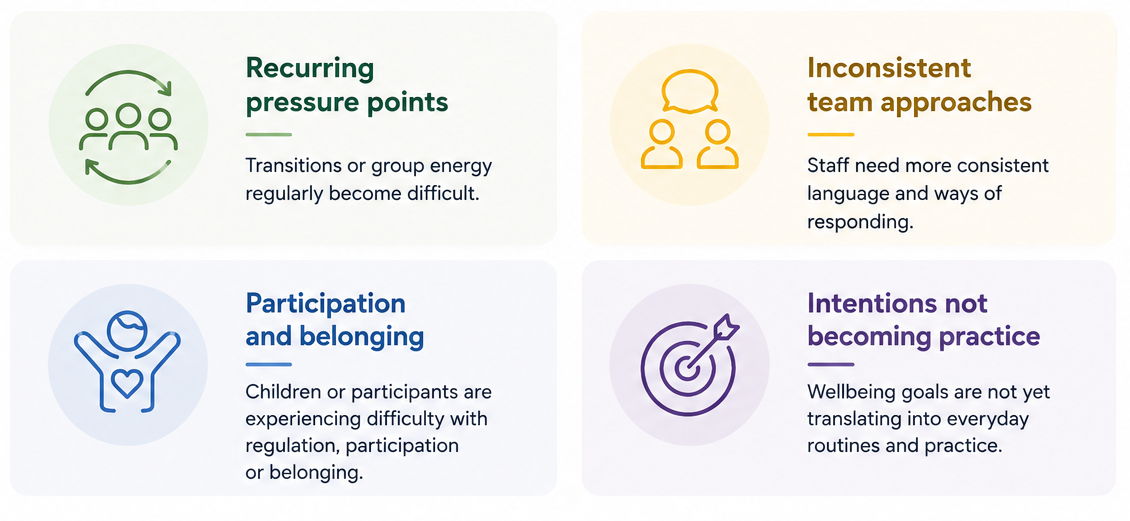
Also, a team may already be working well and want to deepen or extend its practice.

What we work on together
Regulation & Energy
Noticing and responding to group energy, transition pressure points and regulation needs to support participation across different energy levels.
Practice & Culture
Strengthening educator stance; how adults position themselves, communicate and respond - alongside shared language, reflective practice and relational leadership.
Systems & Planning
Connecting relational wellbeing with curriculum, programming, quality improvement and sustainable implementation.
Growing Well Together looks beneath behaviour to the relational conditions shaping participation; including group energy, educator stance, safety and readiness to engage
How we work alongside your setting
A Practice Partnership is collaborative and responsive. We begin with the strengths, pressures and priorities of your setting, then work alongside the team to develop practical and sustainable ways forward.
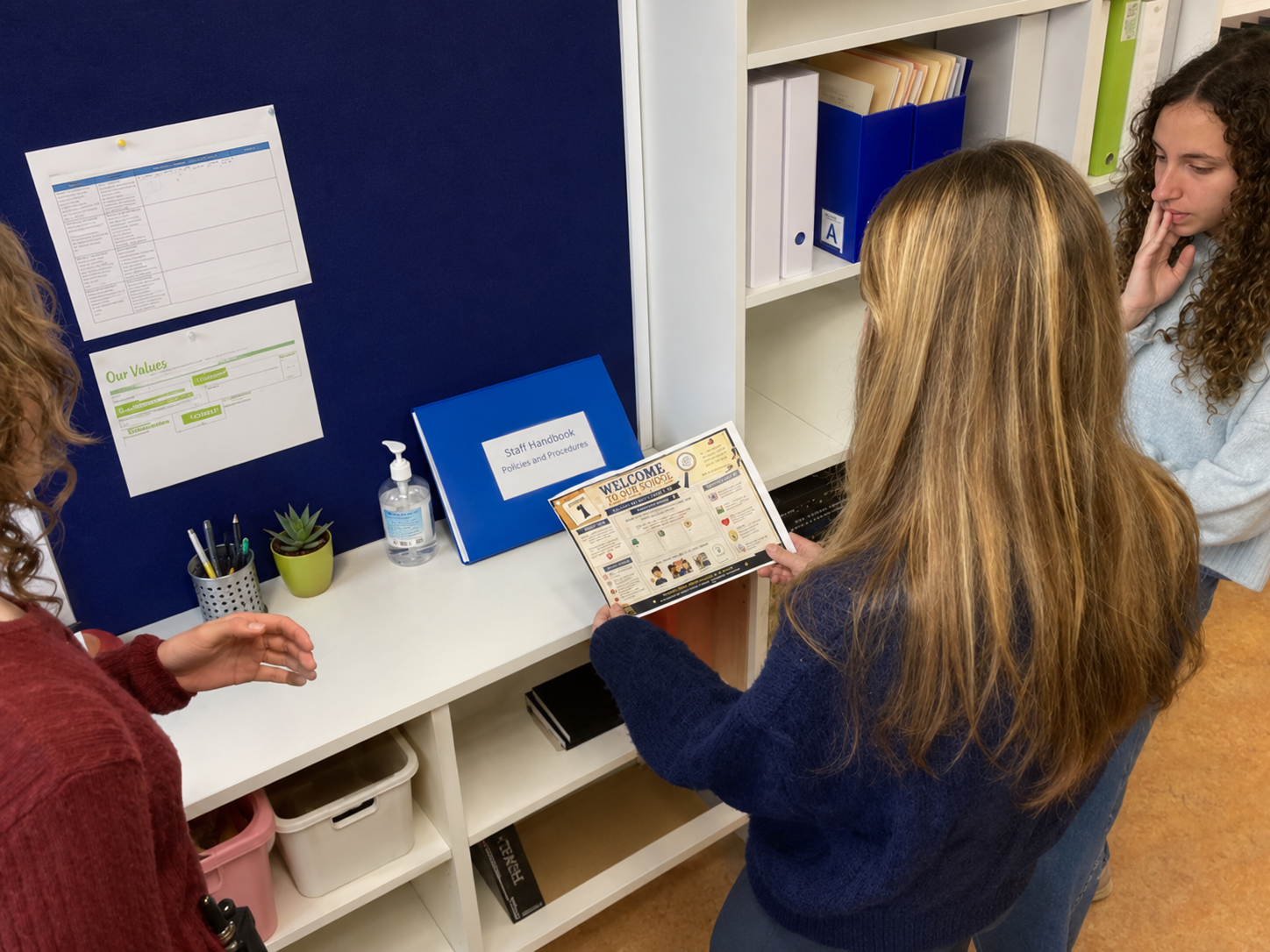
Our work together usually follows four connected stages
Understand
We begin with what is already working, where teams feel stretched and what the setting wants to strengthen.
Notice
Through conversation, observation and reflection, we identify patterns across routines, relationships, environments and group energy.
Develop
We model, plan and develop practical strategies, tools and shared language with the team.
Embed
We support implementation, reflection and adjustment so the practice becomes usable and sustainable.
How we review progress
Together, we agree on the priorities for the partnership and what meaningful improvement would look like in your setting.
Review may draw on staff reflections, practice observations and feedback from the people involved. We consider what is changing in everyday routines, team approaches and opportunities for participation, alongside what remains challenging.
At agreed review points, we reflect on what is helping, adjust the approach and identify next steps the team can sustain.
You may have a clear priority, a recurring challenge or simply a sense that something could work better. You may also want to build on strong practice already happening in your setting.
We begin with a conversation about what is working, where support could help and what your team would like to strengthen. Together, we identify a manageable focus and consider the most useful next step.
You do not need a fully developed brief before getting in touch.
Ways to begin
site visits and practice observation
reflective conversations with educators and leaders
professional learning
modelling and co-facilitation
curriculum, routine or program planning
practical tools and follow-up implementation support
What a partnership may include:
Jump to:
Growing Well Together draws on experience in education and care leadership, group facilitation, music and creative practice. We bring this experience to the everyday work of supporting participation, connection and wellbeing, alongside the knowledge and strengths of your team.
Our approach is informed by ongoing professional learning, reflective practice and existing relationships across education, wellbeing and community settings.
Where a partnership would benefit from specialist knowledge or cultural expertise, additional contributors may be engaged within the agreed scope. Their role is discussed with your organisation, and their knowledge, time and contribution are appropriately recognised and remunerated.
Connected practice, grounded experience
Beginning a Practice Partnership
Practice Partnerships are developed collaboratively, with the length, focus and level of support shaped around your setting.
An initial conversation helps us understand your priorities and identify a practical starting point. A tailored proposal then outlines:
the agreed focus and intended outcomes
the timeframe and planned visits or meetings
staff involvement and responsibilities
practical resources, planning or other agreed outputs
review points and follow-up support
associated fees.
The scope is agreed together before work begins, giving your team a clear understanding of what is included and how we will work alongside you.
Every setting has its own people, rhythms, pressures and strengths.
A Practice Partnership begins with a conversation about your context, your priorities, and a practical place to start.